Design System
The E-Shop Design System is a comprehensive collection of frameworks, guidelines, and tools that define styles, color tokens, typography, UI components, interaction states, and spacing rules. It ensures consistent design, accelerates development, and enhances the overall user experience across the platform.
The Challenge
When I started working on the E-commerce product, I noticed a lack of visual and functional consistency across the interface. Similar elements were designed differently: multiple color variations were used without clear rules, typography styles varied in identical contexts, and many UI components - such as buttons, inputs, and forms - looked and behaved differently despite serving the same purpose.
As the product continued to grow and new features were added, these inconsistencies became more noticeable and began to negatively affect both the user experience and the development process.
After analyzing the existing inconsistencies and reflecting on the long-term growth of the product, I concluded that building a structured design system was essential. A unified system was needed to standardize styles, components, and interaction patterns, ensuring scalability, consistency, and efficiency across the entire platform.
Building the Foundations
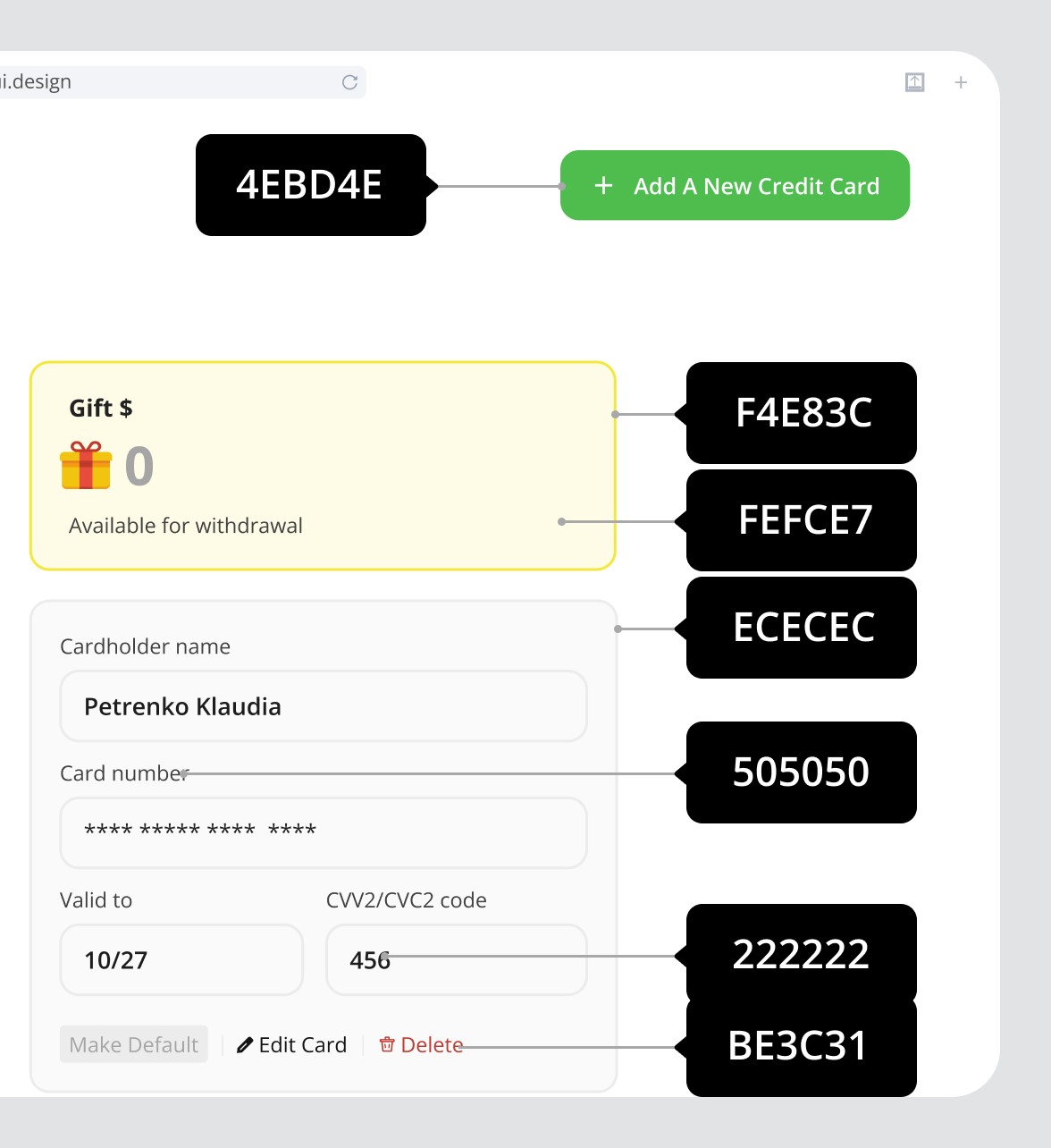
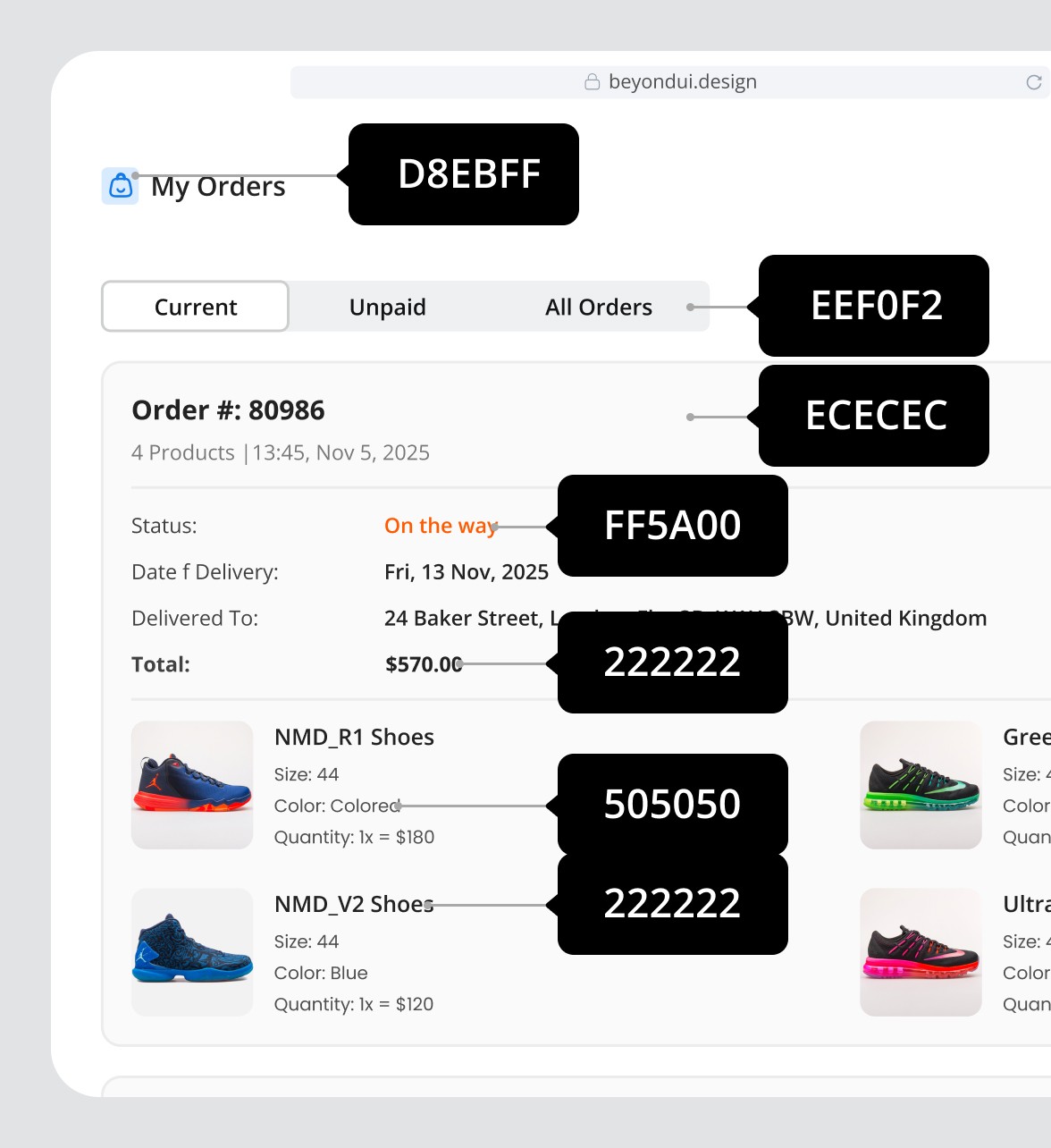
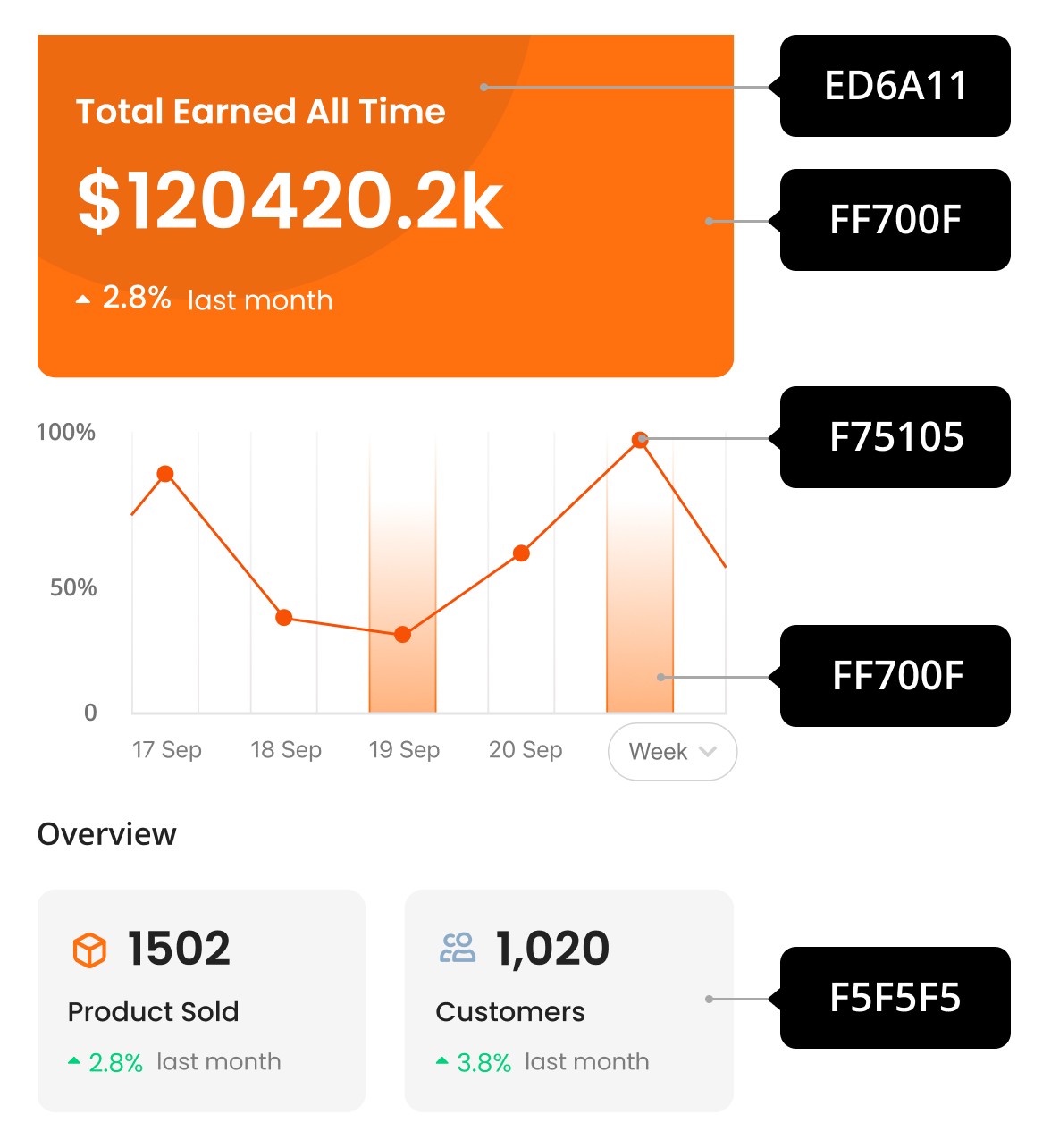
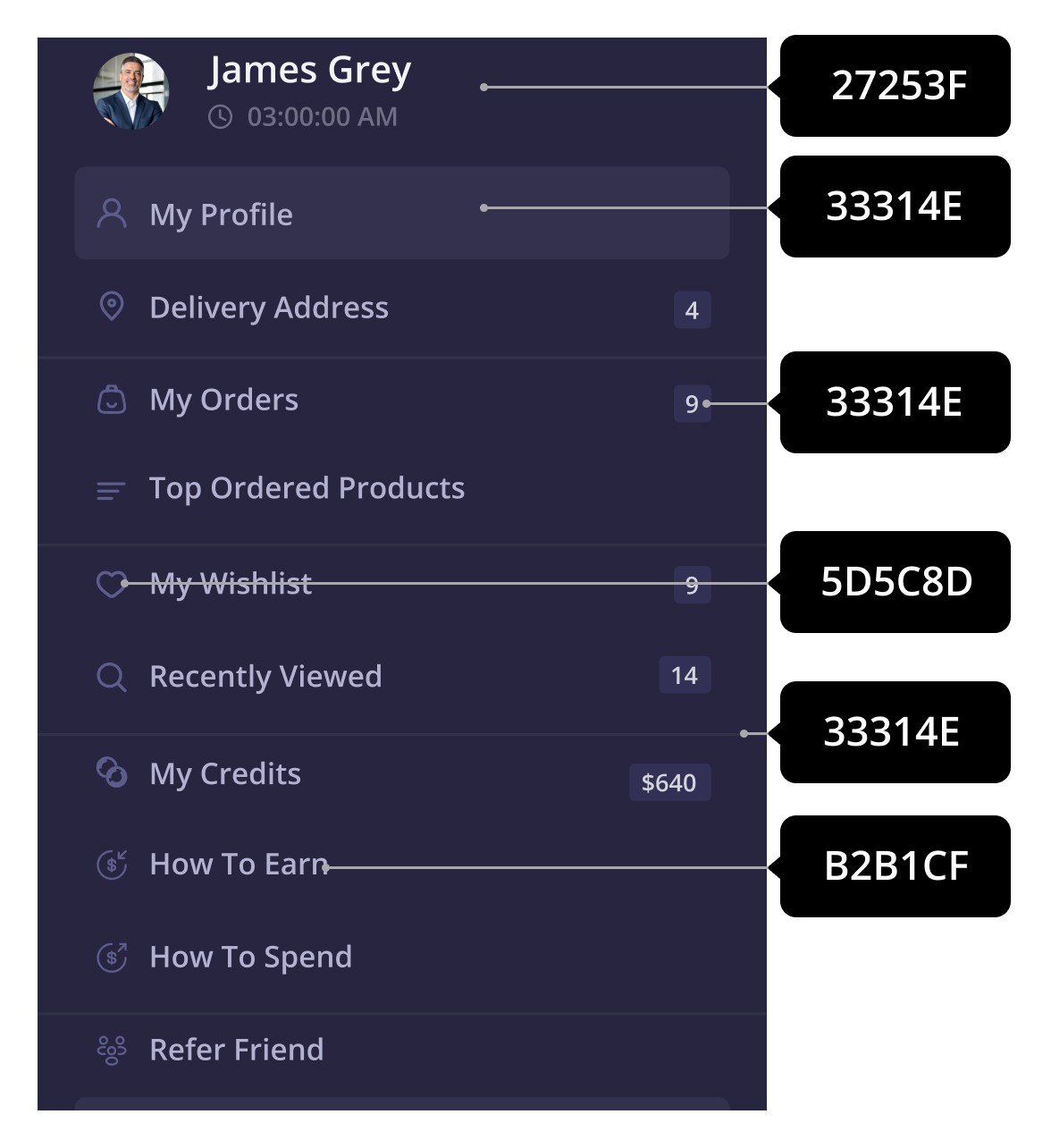
The next stage began with a full audit of the e-commerce platform and prioritization of key UI patterns. Based on the audit findings, I established core design foundations by creating design tokens for colors, typography, spacing, border radius, and elevation.
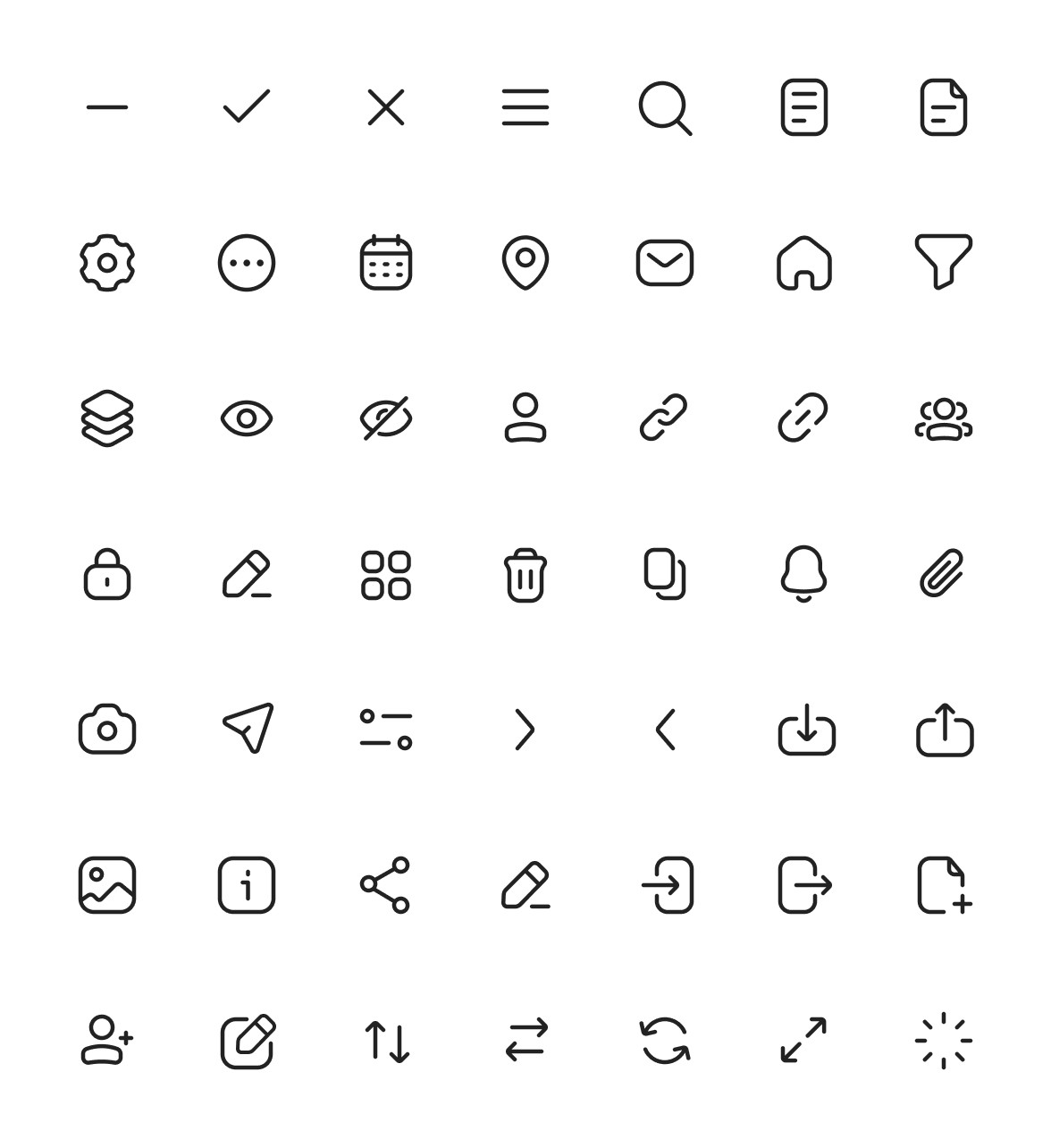
To ensure visual consistency and scalability, I also defined a unified icon system and selected a cohesive icon library that aligned with the overall design language. These foundational decisions became the base for all future components and layouts across the platform.

UI Kits & Interface Elements
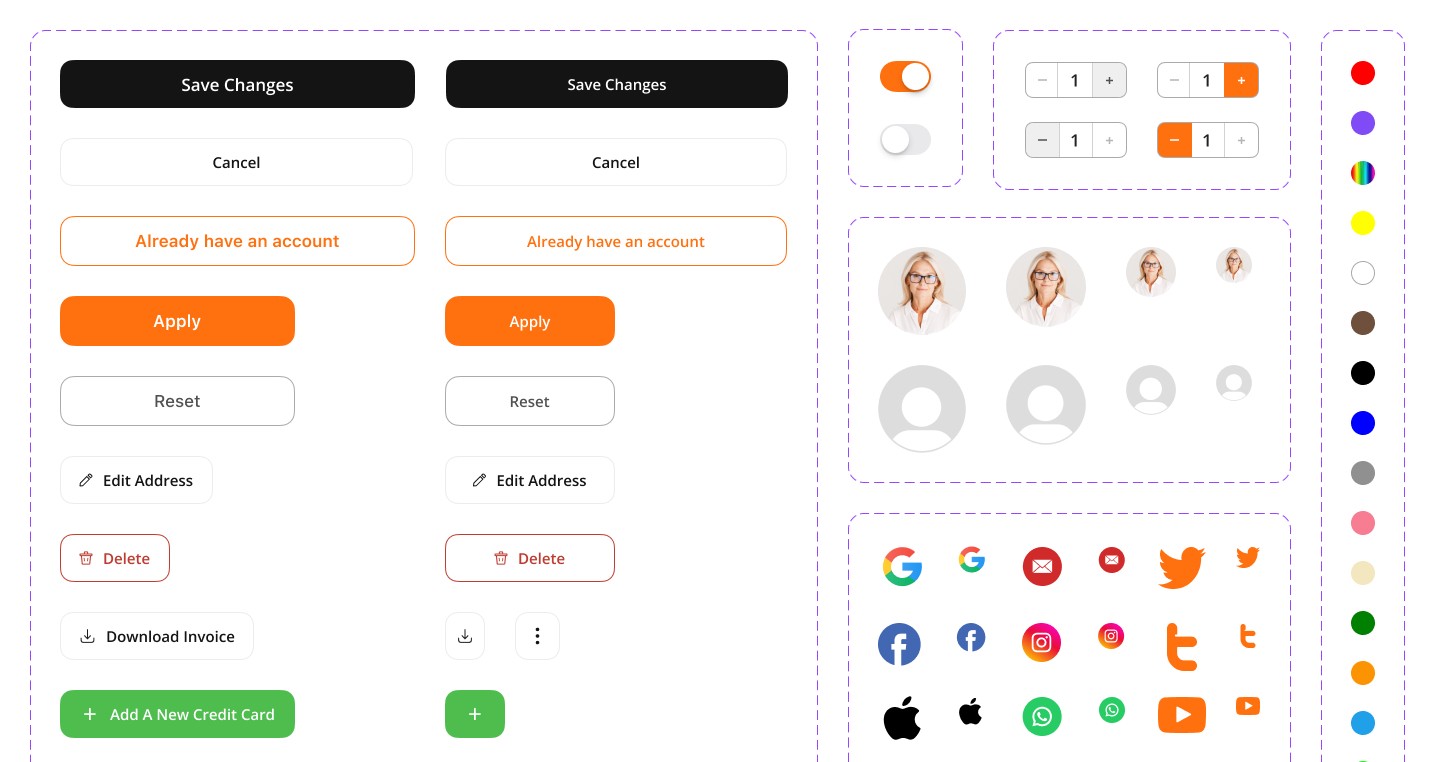
A structured collection of reusable UI kits designed to ensure visual consistency and scalability across the e-commerce platform.
This set includes buttons with all interaction states, adaptive iconography, radio buttons, quantity selectors with state variations, profile avatars, brand and social UI elements, and color systems for product filtering.
All components are fully responsive, state-driven, and built to support seamless user interactions across devices.
Form States, Validation & Spacing System
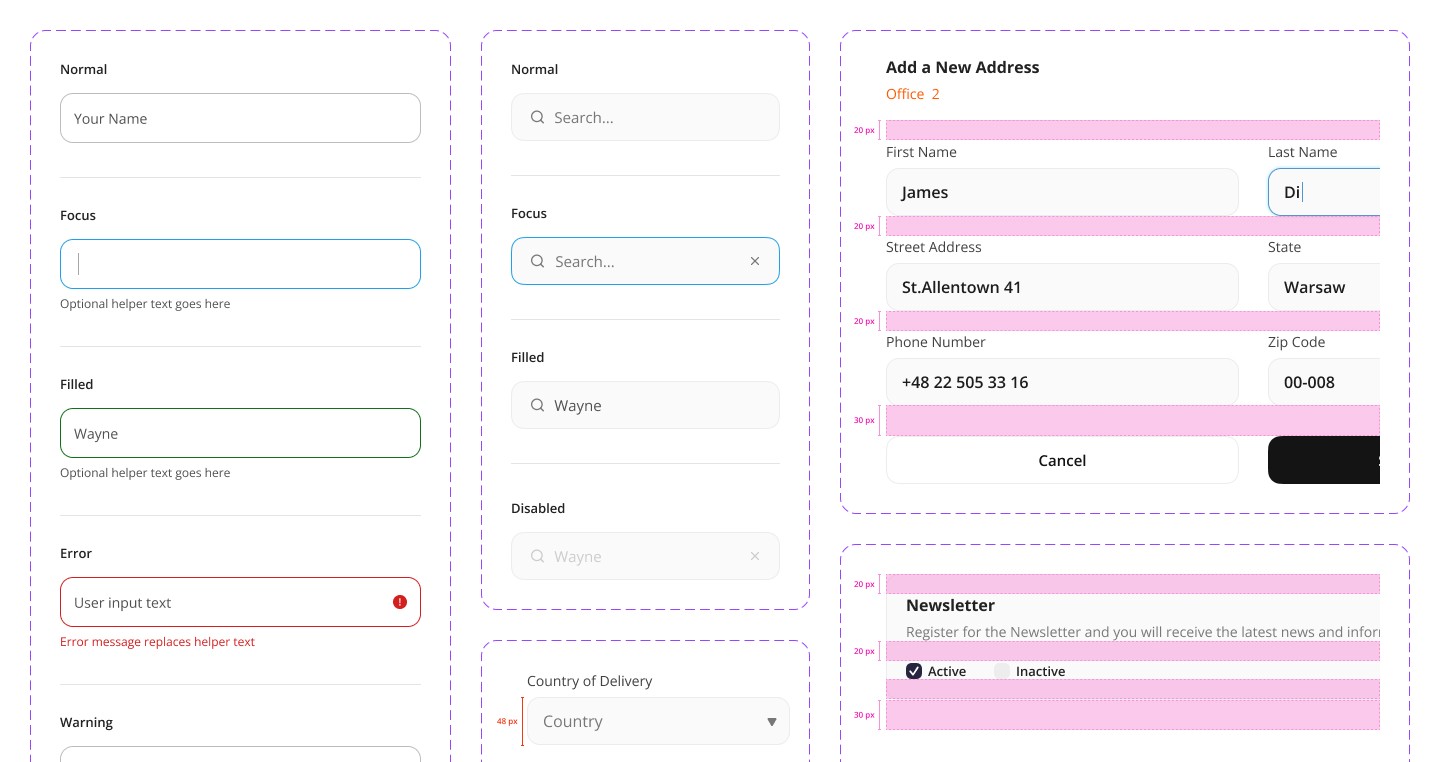
A unified system defining all form states and behaviors, including default, focus, error, success, and disabled states, along with inline hints and validation messages that guide users during form completion.
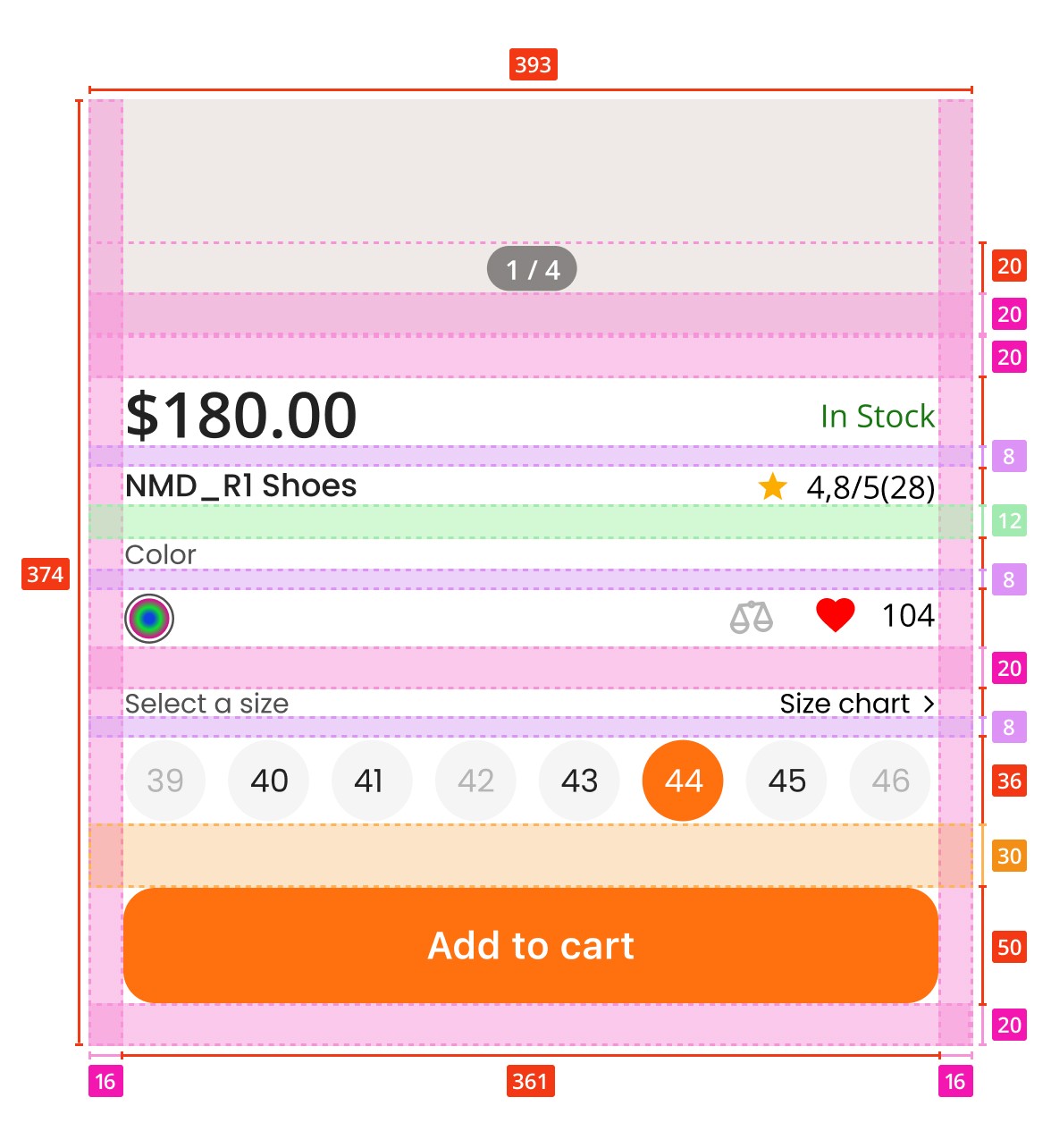
This block also demonstrates the spacing hierarchy used consistently across the entire product, ensuring visual rhythm, clarity, and predictable layout patterns throughout the interface.
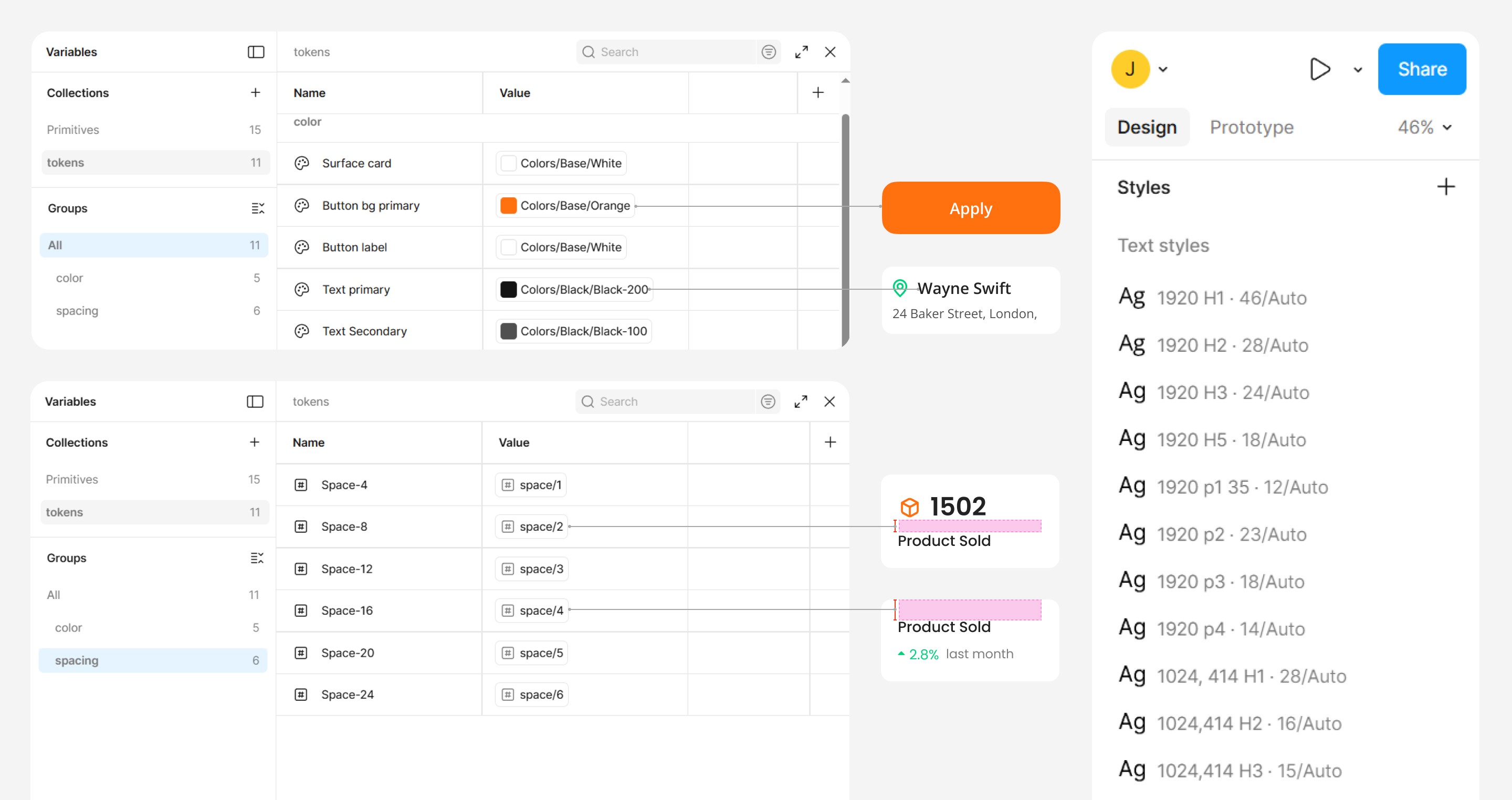
Design System in Figma: Styles, Components & Variables
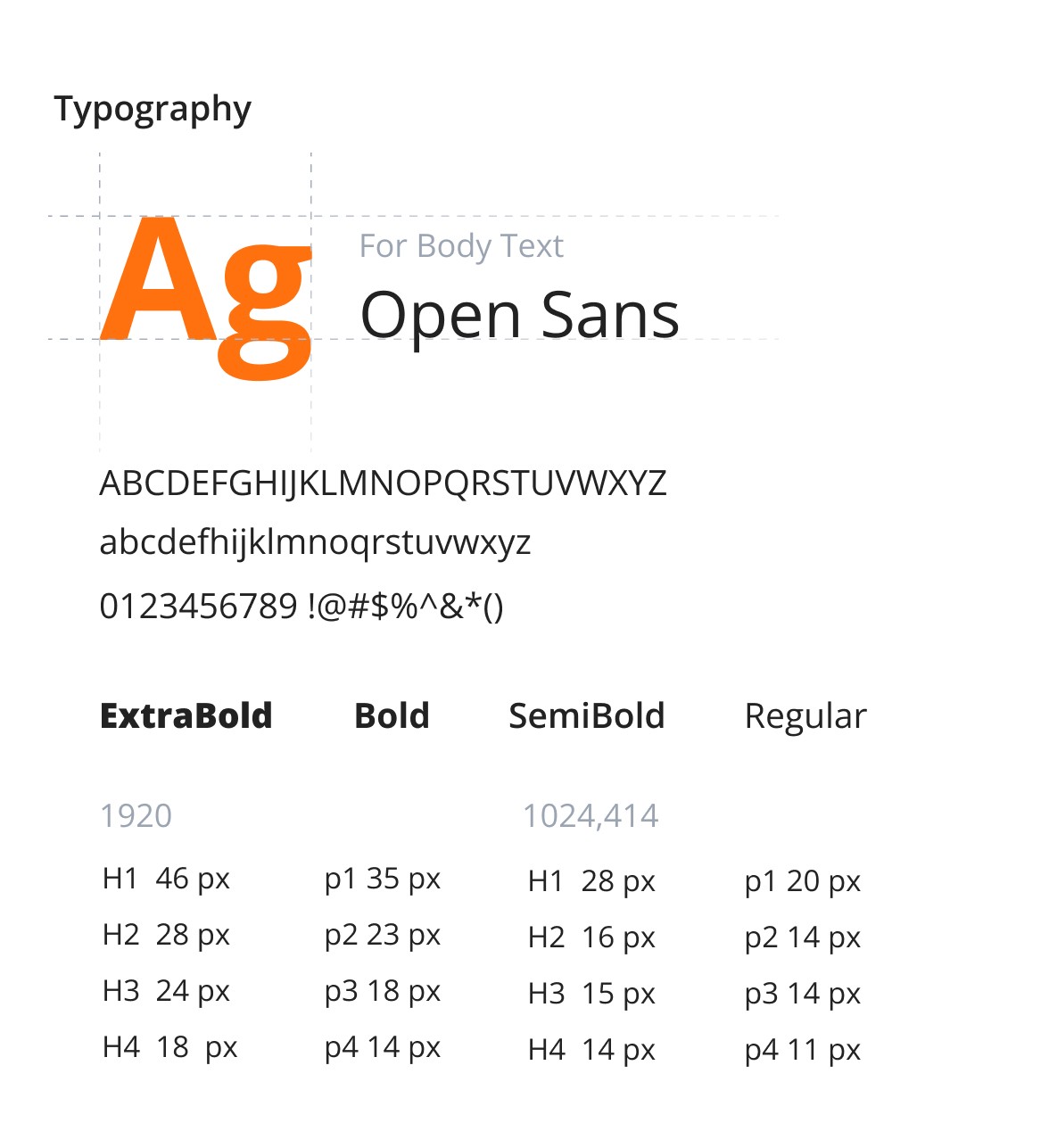
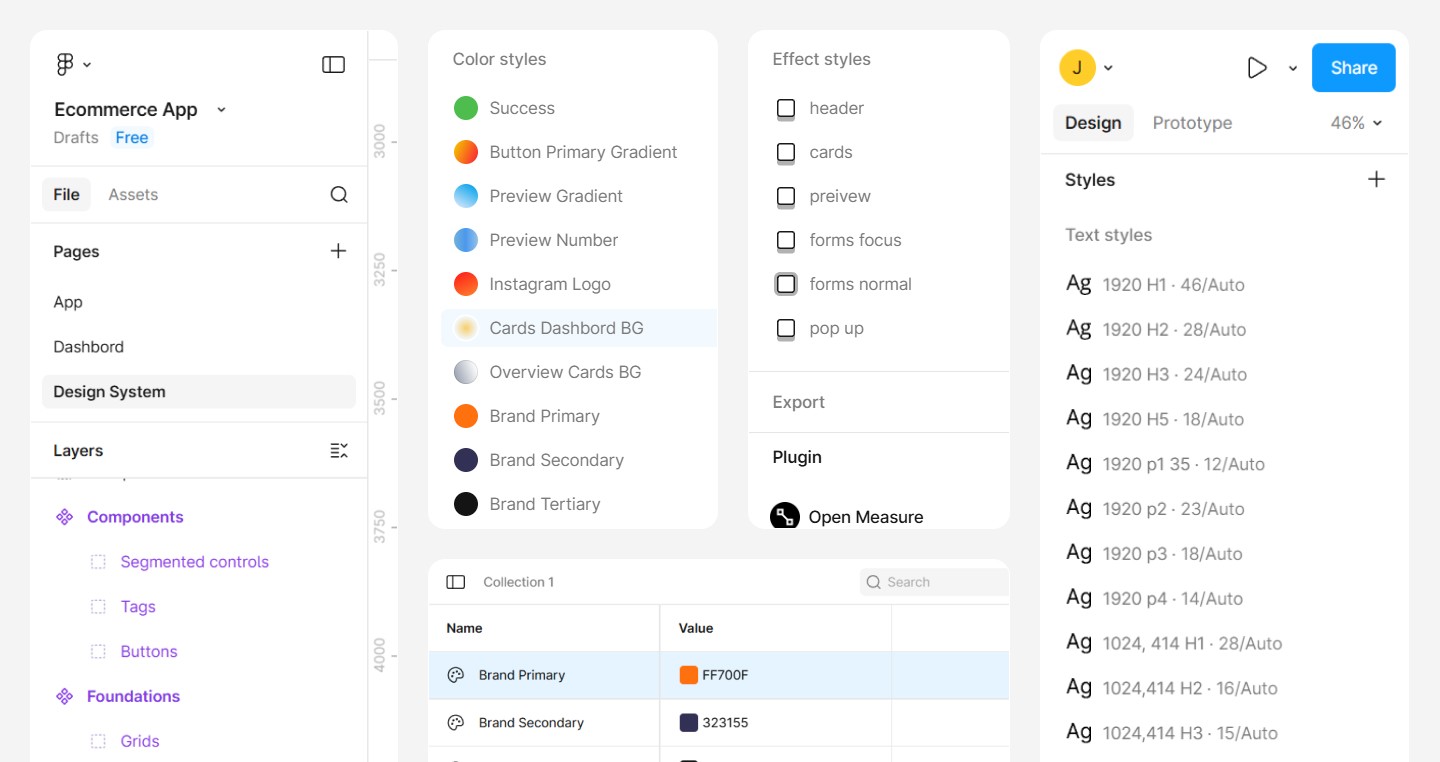
A behind-the-scenes look at the design system built in Figma, showcasing structured typography scales from H1 to body (p) text, defined color families and semantic color styles, and fully documented shadow styles.
The block also highlights grouped components organized into logical component sets, along with color variables used throughout the design to ensure consistency, scalability, and efficient handoff to development.
Product Card Theme Tokens: Light & Dark Modes
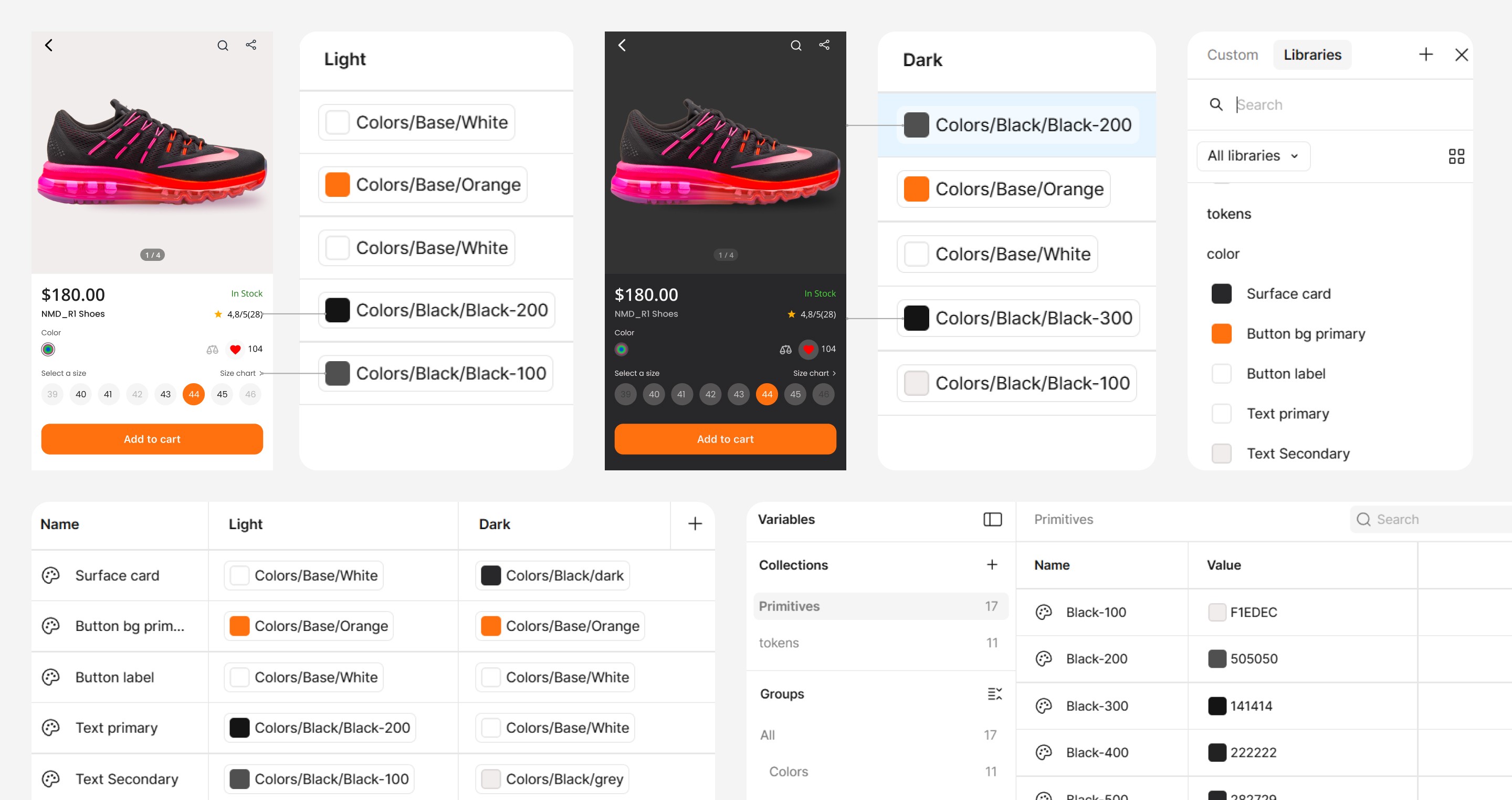
A structured set of design tokens defining both light and dark themes for product cards. Each token specifies colors, spacing, and other visual properties to ensure consistent styling, readable content, and scalable UI patterns across different themes.
This approach allows seamless switching between themes while maintaining a cohesive look and predictable layout for every product card in the e-commerce platform.
Outcome
After implementing the design system for the e-commerce platform, the following improvements were achieved:
The interface became visually consistent across all pages and components, enhancing the overall user experience.
Development and testing cycles accelerated by 20%, thanks to reusable components and standardized tokens.
The process of creating new product pages and features sped up by 30%, ensuring faster time-to-market.
The use of design tokens and standardized components reduced redundancy in the codebase, positively impacting product performance and maintainability.